

The Fog of War (2003)  : Errol Morris ♥♥♥♡
สัมภาษณ์อดีตรัฐมนตรีว่าการกระทรวงกลาโหม Robert McNamara (1916-2009) ในยุคสมัย John F. Kennedy และ Lyndon B. Johnson เปิดเผยเบื้องลึก เบื้องหลัง สาเหตุผลที่สหรัฐอเมริกาเข้าสู่สงคราม Vietnam War, คว้ารางวัล Oscar: Best Documentary Feature
เมื่อวันก่อนผมเขียนถึง Gates of Heaven (1978) รู้สึกชื่นชอบประทับใจลีลาการนำเสนอของผกก. Morris จึงตั้งใจมองหารับชมอีกสักผลงาน ตัดสินใจเลือก The Fog of War (2003) เพราะได้รับการโหวตจากหลายๆสำนัก ติดอันดับสารคดียอดเยี่ยมตลอดกาล
- Sight & Sound: Critics’ 50 Greatest Documentaries of All Time (2019) ติดอันดับ #37 (ร่วม)
- Vouge: The 82 Best Documentaries of All Time (2023) ไม่มีอันดับ
- TIMEOUT: 68 Best Documentaries of All Time (2025) ติดอันดับ #45
แต่สิ่งที่ผมไม่ได้เตรียมตัวก็คือประเด็นการสัมภาษณ์ Robert McNamara บุคคลผู้อยู่เบื้องเหตุการณ์สำคัญๆตั้งแต่สงครามโลกครั้งที่สอง วิกฤตการณ์ขีปนาวุธคิวบา และสงครามเวียดนาม พูดง่ายๆคือเกิดไม่ทัน เลยไม่ได้มีความสนใจรายละเอียดเชิงลึก ล่วงรู้ไปก็ไม่ก่อให้เกิดประโยชน์อันใด … คงเฉพาะบุคคลมีชีวิตพานผ่านช่วงเวลานั้น ได้รับฟังคำแก้ต่าง เบื้องหลังจากอีกมุมมองหนึ่ง แล้วอาจทำให้โลกทัศน์ปรับเปลี่ยนแปลงไป
สิ่งน่าสนใจจริงๆของสารคดีเรื่องนี้ คือลีลาการนำเสนอของผกก. Morris ประดิษฐ์อุปกรณ์ชื่อว่า Interrotron ที่สามารถทำให้ผู้สัมภาษณ์สบตาหน้ากล้อง “Breaking the Fourth Wall” เหมือนกำลังสนทนากับผู้ชมตลอดเวลา นั่นช่วยให้การสังเกตอากัปกิริยา ภาษากาย จับผิดได้ว่าพูดจริง อารมณ์จริง หรือเพียงการตอแหล สร้างภาพให้ดูดี, คลุกเคล้าเข้ากับ Archive Footage และเพลงประกอบสุดปั่นป่วนของ Philip Glass (และ John Kusiak) … น่าสนใจกว่าตัวของ McNamara เสียอีก!
ชื่อเต็มๆของสารคดีเรื่องนี้คือ The Fog of War: Eleven Lessons from the Life of Robert S. McNamara แต่แท้จริงแล้ว 11 บทเรียนดังกล่าวเป็นบทสรุปของผกก. Morris ซึ่งตัวของ McNamara ไม่เห็นชอบด้วยสักเท่าไหร่ จึงทำการแถลงไขด้วย “Robert S. McNamara’s Ten Lessons” รวมอยู่ในของแถม (Special Feature) แผ่น DVD/Blu-ray … เดี๋ยวผมจะเขียนสรุปไว้ให้ช่วงท้าย
Errol Mark Morris (เกิดปี ค.ศ. 1948) ผู้กำกับสารคดี สัญชาติอเมริกัน เกิดที่ Hewlett, New York ในครอบครัวเชื้อสาย Jewish มารดาเป็นครูสอนเปียโน แต่วัยเด็กชื่นชอบเล่นเชลโล่ สนิทสนมเพื่อนร่วมชั้น Philip Glass โตขึ้นเข้าเรียนประวัติศาสตร์ University of Wisconsin–Madison จบออกมาทำงานเซลล์แมน ตั้งใจจะศึกษาต่อปริญญาโท วิทยาศาสตร์ ฟิสิกส์ และปรัชญา แต่เข้าเรียนแล้วไม่ชอบเลยตัดสินใจลาออก กระทั่งมีโอกาสเป็นสมาชิก Pacific Film Archive คลั่งไคล้หนังนัวร์ ได้แรงบันดาลใจ Psycho (1960), สรรค์สร้างสารคดีเรื่องแรก Gates of Heaven (1978), กลายเป็นตำนานกับ The Thin Blue Line (1988)
ผกก. Morris เมื่อได้มีโอกาสอ่านหนังสือ Wilson’s Ghost: Reducing the Risk of Conflict, Killing, and Catastrophe in the 21st Century (2001) เขียนโดย Robert McNamara และ James G. Blight เลยติดต่อขอสัมภาษณ์ McNamara ในตอนแรกตั้งใจจะทำเป็นรายการพิเศษฉายโทรทัศน์ความยาวหนึ่งชั่วโมง
I invited him to come to Cambridge, Massachusetts, where I live, for a filmed interview, and, much to my surprise, he accepted. I now think he did so because he saw me as part of his book tour. He had been promoting his most recent book, Wilson’s Ghost, and he saw me as just one more stop along the way.
Errol Morris
ในการพบเจอกันครั้งแรก กำหนดการสัมภาษณ์แค่เพียงชั่วโมงเดียว แต่คงเพราะสนทนาถูกคอ เลยพูดคุยต่อชั่วโมงที่สอง-สาม ก่อนกลายเป็นห้าชั่วโมงในระยะเวลาสองวัน! จากนั้น McNamara ขอให้ผกก. Morris ตัดต่อสารคดีจากฟุตเทจดังกล่าว ถ้าได้ผลลัพท์น่าพึงพอใจก็จะหวนกลับมาสัมภาษณ์กันต่อ … สุดท้ายแล้ว McNamara หวนกลับมาให้สัมภาษณ์อีกสอง-สามครั้ง รวมฟุตเทจกว่า 20+ ชั่วโมง
เกร็ด: การสัมภาษณ์ระหว่างผกก. Morris และ Robert McNamara เกิดขึ้นก่อนวินาศกรรม 11 กันยายน ค.ศ. 2001 จึงไม่มีการพาดพิงถึงเหตุการณ์ดังกล่าว
Robert Strange McNamara (1916-2009) นักธุรกิจ อดีตรัฐมนตรีว่าการกระทรวงกลาโหม สัญชาติอเมริกัน เกิดที่ San Francisco, California บิดาเป็นผู้จัดการบริษัทรองเท้าเชื้อสาย Irish อพยพมาในช่วง Great Irish Famine (1845-52) ตอนแรกปักหลักอยู่ Massachusetts ก่อนย้ายมา California
หลังเรียนจบมัธยม Piedmont High School เข้าศึกษาต่อคณะเศรษฐศาสตร์ สาขารองคณิตศาสตร์และปรัชญา University of California, Berkeley ต่อปริญญาโทบริหารธุรกิจ (M.B.A.) Harvard Business School แล้วกลายเป็นผู้ช่วยศาสตราจารย์ (ผ.ศ.) อายุน้อยที่สุดขณะนั้น!
ช่วงระหว่างสงครามโลกครั้งที่สอง กองทัพอากาศ U.S. Air Forces ขอความช่วยเหลือจาก Harvard ส่งผ.ศ. McNamara ทำงานอยู่ยัง Statistical Control ทำการวิเคราะห์หาวิธีการที่ทำให้เครื่องบินทิ้งระเบิด B-29 ทำงานได้อย่างมีประสิทธิภาพสูงสุด … เมื่อเสร็จสิ้นภารกิจรับใช้ชาติ ได้รับประดับยศพันโท (Lieutenant Colonel) พร้อมเครื่องอิสริยาภรณ์ Legion of Merit
หลังสงครามพันเอก Tex Thornton ชักชวน McNamara และสมาชิก Statistical Control เข้าร่วมบริษัท Ford Motor Company (มีคำเรียก Whiz Kids) ใช้ข้อมูลสถิติปรับปรุงการผลิตรถยนต์ราคาถูก ทั้งยังริเริ่มต้นการใช้เข็มขัดนิรภัยเพื่อความปลอดภัยบนท้องถนน จนปีค.ศ. 1960 ได้รับแต่งตั้งเป็นประธานบริษัท แต่น้ำหมึกยังไม่ทันแห้ง John F. Kennedy หลังชนะการเลือกตั้งประธานาธิบดี เอ่ยปากชักชวนมาดำรงตำแหน่งรัฐมนตรีว่าการกระทรวงกลาโหม
Robert McNamara: “Mr. President, it’s absurd. I’m not qualified.”
John F. Kennedy: “Look, Bob. I don’t think there’s any school for presidents either.”
ช่วงระหว่างดำรงตำแหน่งรัฐมนตรีว่าการกระทรวงกลาโหม McNamara มีส่วนร่วมตัดสินใจในสองเหตุการณ์ใหญ่ๆ (ที่มีการกล่าวถึงในสารคดีเรื่องนี้)
- วิกฤตการณ์ขีปนาวุธคิวบา (Cuban Missile Crisis) ระหว่างวันที่ 16-28 ตุลาคม ค.ศ. 1962 เกือบไปแล้วที่สหรัฐอเมริกาจะโจมตีประเทศคิวบา เพราะเข้าใจผิดว่าอีกฝ่ายถือครองอาวุธนิวเคลียร์จึงเตรียมพร้อมจะโจมตี โชคดีอย่างสุดๆที่การเจรจาสำเร็จลุล่วง
- สงครามเวียดนาม (Vietnam War) เริ่มมาตั้งแต่ ค.ศ. 1955 ซึ่งสหรัฐอเมริกาเพียงเฝ้าสังเกตการณ์ McNamara คือตัวตั้งตัวตีจะถอนกำลังออกมาในปี ค.ศ. 1965 แต่การถูกลอบสังหารของปธน. John F. Kennedy กอปรกับการรุกคืบของเวียดนามเหนือ ปธน. Lyndon B. Johnson จึงตัดสินใจเข้าร่วมสงครามอย่างเต็มรูปแบบ
ความล้มเหลวต่อสงครามเวียดนาม ทำให้ McNamara ตัดสินใจยื่นใบลาออก (แต่ก็ไม่ต่างจากถูกปธน. Johnson ขับไล่ออก) หลังจากได้รับเหรียญอิสรภาพ (Medal of Freedom) และเหรียญเชิดชูเกียรติ (Distinguished Service Medal) ก็ได้รับเลือกเป็นประธาน World Bank Group ระหว่างเดือนเมษายน ค.ศ. 1968 จนถึงมิถุนายน ค.ศ. 1981 … เห็นว่าผกก. Morris บันทึกบทสัมภาษณ์ McNamara ช่วงทำงาน World Bank แต่เลือกตัดทิ้งเพราะไม่สามารถนำมาเป็นบทเรียนหมอกสงคราม
Because I’m making a movie! This is not, strictly speaking, history or biography or even a combination of both. It’s a story, and I had to pick and choose among the many, many parts of McNamara’s life and among the many, many stories he tells.
Errol Morris
งานภาพของหนังมีส่วนผสมของบทสัมภาษณ์ (ถ่ายภาพโดย Robert Chappell), นำจากคลังเก็บ (Archive Footage), ภาพกราฟฟิก/อนิเมชั่น (Animation), และบางครั้งมีการจำลองสถานการณ์ (ถ่ายภาพโดย Peter Donahue) ที่สามารถเติมเต็มเรื่องราวในหัวข้อสนทนานั้นๆ
ในส่วนของการสัมภาษณ์ หลายปีก่อนผกก. Morris ประดิษฐ์อุปกรณ์ตั้งชื่อว่า Interrotron โดยได้แรงบันดาลใจจาก Teleprompters (หรือ Autocue) อุปกรณ์ที่นักการเมือง และผู้ประกาศข่าว (Newscaster) นิยมใช้สำหรับอ่านข้อความปรากฎเบื้องหน้า โดยสายตาจับจ้องมองมายังเลนส์กล้อง ดูเหมือนกำลังพูดคุยสนทนากับผู้ชม “Breaking the Fourth Wall”
ซึ่งสำหรับ Interrotron (ส่วนผสมของ Interview และ Terror) เปลี่ยนจากข้อความตัวอักษร มาเป็นภาพผู้สัมภาษณ์ฉายบนหน้าจอมอนิเตอร์ (ทำให้ผู้สัมภาษณ์ไม่จำเป็นต้องนั่งอยู่ข้างกล้องเสมอไป) ผลลัพท์เพื่อการสบตาคู่สนทนา จับจ้องมองมายังเลนส์กล้อง ดูเหมือนกำลังพูดคุยกับผู้ชมเช่นเดียวกัน!
[Interrotron] creates greater distance and greater intimacy. And it also creates the true first person. Now, when people make eye contact with me, it can be preserved on film.
Errol Morris


ด้วยความที่สารคดีเรื่องนี้สัมภาษณ์แค่เพียงบุคคลเดียว Robert McNamara ถ้าจะถ่ายมุมเดิม ตำแหน่งเดิม ระยะภาพเดิมตลอดทั้งเรื่องมันคงน่าเบื่อหน่ายสิ้นดี! ด้วยเหตุนี้กล้องจึงมีการขยับเคลื่อนไหวอยู่เรื่อยๆ ประเดี๋ยวเอียงซ้าย โยกขวา โคลสอัพใบหน้า บางครั้งยังมี Jump Cut, Cut-To-Black แทรกภาพประกอบคำบรรยาย และได้ยินเสียงของผกก. Morris สอบถามความคิดเห็นดังขึ้นมา


หลังการสัมภาษณ์เสร็จสิ้น ผกก. Morris ถึงเริ่มทำการขุดคุ้ยค้นหาฟุตเทจ (Archive Footage) ภาพถ่าย คลิปเสียง เอกสารข้อมูลต่างๆ นำมาร้อยเรียงประกอบเรื่องเล่า บางครั้งอาจมีการถ่ายทำเพิ่มเติม เพื่อใช้เป็นหลักฐานประกอบการสนทนา และช่วยให้ผู้ชมทำความเข้าใจเนื้อหาสารคดีง่ายขึ้นด้วย
ซึ่งบรรดาสิ่งแทรกใส่เข้ามาประกอบคำบรรยายเหล่านี้ ล้วนแพรวพราวด้วยสารพัดลูกเล่นภาพยนตร์ คือมันมีมากมายจนผมไม่สามารถกล่าวถึงได้ทั้งหมด และเราไม่จำเป็นต้องเสียเวลาขบครุ่นคิดว่าใช้ลูกเล่นนี้ทำไม? เคลือบแฝงนัยยะอะไร? เพราะใจความสารคดีอยู่ที่เนื้อหามากกว่าลีลาการนำเสนอ


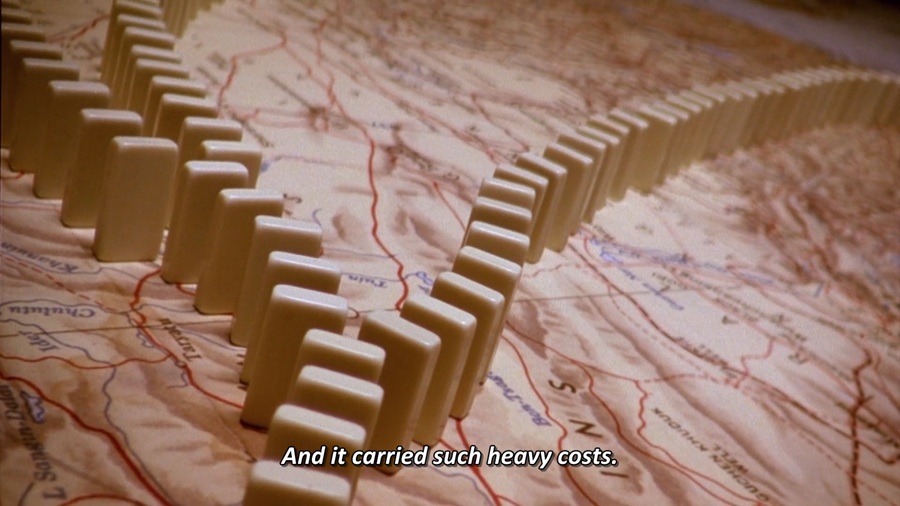
มีหนึ่งในภาพเชิงสัญญะที่ผมขอกล่าวถึงสักเล็กน้อย โดมิโน (Domino) เมื่อเราผลักโดมิโนตัวหนึ่ง มันจะส่งผลกระทบให้เกิดการล้มตามกันมา บางคนเรียกว่าทฤษฎีโดมิโน (Domino Theory) หรือผลกระทบแบบโดมิโน (Domino Effect), สำหรับสารคดีเรื่องนี้สามารถสื่อถึงการตัดสินใจผิดพลาดครั้งหนึ่ง (เมื่อตอนสงครามเวียดนาม) ย่อมส่งผลกระทบติดตามมา จนสร้างเสียหายประเมินค่าไม่ได้
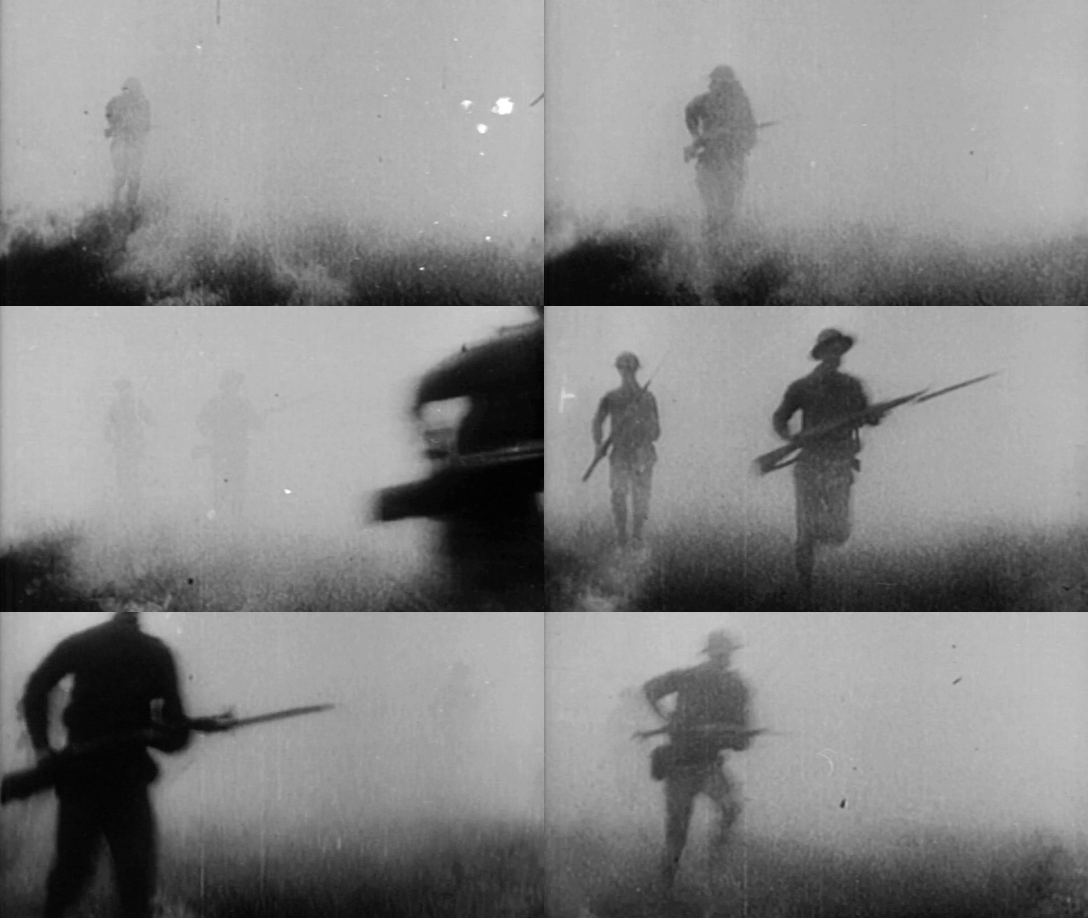
What “the fog of war” means is: War is so complex, it’s beyond the ability of the human mind to comprehend all the variables. Our judgment, our understanding, are not adequate. And we kill people unnecessarily.
สิ่งที่ผมชื่นชอบสุดของสารคดีเรื่องนี้ก็คือคำอธิบายความหมาย “The Fog of War” เปรียบเทียบสงครามกับหมอกควัน เต็มไปด้วยความซับซ้อน ข้อมูล-รายละเอียด-ตัวแปรมากมาย ไม่มีทางที่มนุษย์จะสามารถทำความเข้าใจทั้งหมด ด้วยเหตุนี้มันเลยอาจเกิดการตัดสินใจผิดพลาด สายตาพร่ามัว มองไม่เห็นเบื้องหน้า พลั้งพลาดฆ่าคนตาย ไม่เว้นแม้แต่พวกเดียวกันเอง
ตัดต่อโดย Doug Abel, Chyld King, Karen Schmeer
แรกเริ่มนั้นผกก. Morris ตั้งใจจะตัดต่อแบบเส้นตรงทั่วๆไป แต่รายละเอียดสัมภาษณ์กว่า 20 ชั่วโมง ทำให้ต้องมองหาวิธีนำเสนอที่สร้างความสนใจให้กับผู้ชม จึงแบ่งสารคดีออกเป็น 11 บทเรียนของ Robert S. McNamara ดำเนินเรื่องคู่ขนานกับเรื่องราวชีวิต และสามารถกระโดดไปกระโดดมา ไม่จำเป็นต้องไล่เรียงตามลำดับเวลา
- Empathize with your enemy. มีความเห็นอกเห็นใจศัตรู
- เรื่องเล่าวิกฤตการณ์ขีปนาวุธคิวบา โชคดีว่าปธน. JFK เลือกประณีประณอม ทำให้รอดพ้นสงครามอย่างเส้นยาแดงผ่าแปด
- Rationality alone will not save us. การใช้เหตุใช้ผลเพียงอย่างเดียวอาจไม่ใช่คำตอบ
- เล่ารายละเอียดวิกฤตการณ์ขีปนาวุธคิวบา
- เริ่มต้นชีวประวัติ McNamara ตั้งแต่ถือกำเนิด พานผ่านสงครามโลกครั้งที่หนึ่ง เข้าศึกษามหาวิทยาลัย
- There’s something beyond one’s self. มันมีบางสิ่งอย่างอยู่นอกเหนือความเข้าใจตัวเรา
- McNamara กลายเป็นผู้ช่วยศาสตราจารย์ Harvard
- เข้าร่วมกองทัพ Statistical Control ระหว่างสงครามโลกครั้งที่สอง
- Maximize efficiency. ทำงานอย่างเต็มประสิทธิภาพ
- วิเคราะห์สถิติการทิ้งระเบิด ทำอย่างไรให้ได้ประสิทธิภาพสูงสุด
- ผลลัพท์ทำให้ญี่ปุ่นราบเรียบเป็นหน้ากลอง
- Proportionality should be a guideline in war. สงครามควรมีการแบ่งงานอย่างเป็นสัดเป็นส่วน
- ร้อยเรียงภาพหายนะของญี่ปุ่น
- McNamara สำแดงความรู้สึกผิดต่อหายนะสงคราม แต่ปฏิเสธกล่าวโทษเพราะมันคือหน้าที่พลเมืองปกป้องประเทศชาติ
- หลังสงครามเข้าทำงานบริษัท Ford Motor Company
- Get the data. รู้เขารู้เรา การมีข้อมูลย่อมช่วยให้การตัดสินใจง่ายขึ้น
- นำเอาสถิติมาปรับปรุงการทำงานของบริษัท Ford Motor Company
- ปธน. JFK ชักชวน McNamara มาเป็นรัฐมนตรีว่าการกระทรวงกลาโหม
- McNamara พยายามจะถอนกำลังจากเวียดนาม แต่กลับนำสู่เหตุการณ์ความไม่สงบรุนแรง
- เหตุการณ์ลอบสังหารประธานาธิบดี John F. Kennedy
- ความแตกต่างภายใต้ปธน. Lyndon Johnson
- Belief and seeing are both often wrong. ความเชื่อและสิ่งพบเห็นอาจไม่เป็นจริงเสมอไป
- บังเกิดเหตุการณ์เข้าใจผิด ครุ่นคิดว่าเรือดำน้ำถูกโจมตี เลยปูพรมใส่เวียดนาม
- McNamara คิดเห็นต่างจากปธน. Johnson แต่ก็ตัดสินใจนำพาประเทศเข้าสู่สงครามเวียดนาม
- McNamara อธิบายความเข้าใจผิดของสหรัฐอเมริกาต่อเวียดนาม
- Be prepared to reexamine your reasoning. พร้อมที่ทบทวนตนเองอยู่ตลอดเวลา
- ร้อยเรียงภาพกราฟฟิก ตัวเลข ความตาย หายนะจากสงครามเวียดนาม
- เช่นเดียวกันสงครามโลก McNamara ไม่ได้รู้สึกผิดต่อหายนะบังเกิดขึ้น ตนเองทำตามหน้าที่ คำสั่งประธานาธิบดี
- In order to do good, you may have to engage in evil. เพื่อที่จะเป็นกระทำความดี บางครั้งก็ต้องยินยอมทำสิ่งชั่วร้าย
- เล่าเหตุการณ์ชุมนุมประท้วง และการเผาตัวตายของ Norman R. Morrison (1933-65) เพื่อประท้วงการที่สหรัฐอเมริกาเข้าร่วมสงครามเวียดนาม
- Never say never. อย่าพูดว่าไม่
- McNamara ยื่นใบลาออก (หรือถูกไล่ออกก็ไม่รู้)
- McNamara รับเหรียญอิสรภาพ (Medal of Freedom) และเหรียญเชิดชูเกียรติ
- You can’t change human nature. ไม่มีใครเปลี่ยนแปลงธรรมชาติมนุษย์
- คำอธิบาย The Fog of War
- และทิ้งท้ายปฏิเสธกล่าวขอโทษทุกสิ่งที่ได้ทำลงไป
ด้วยความที่ 11 บทเรียนดังกล่าวเกิดขึ้นจากความรุ่นคิดของผกก. Morris ไม่ได้ขอคำปรึกษาจาก McNamara เจ้าตัวเลยไม่ชอบสักเท่าไหร่ (รวมถึงปัจฉิมบท) เรียกร้องขอให้เอาออก แต่ได้รับคำตอบปฏิเสธ
He was constantly asking for changes. In particular, he never liked my “lessons”. I put in my lessons, the 11 lessons, very, very late in the editing process. And he would point out to me repeatedly, “These are not my lessons; these are your lessons”. I promised to tell him that, whenever I appeared in public talking about the movie, I would point out to the audience, “These are not McNamara’s lessons; these are Errol Morris’ lessons”. So let me do that on this occasion: these are not McNamara’s lessons! They’re mine! Notwithstanding that, they’re still taken directly from things that McNamara says in my interviews with him.
Errol Morris
ด้วยเหตุนี้ McNamara จึงได้ร่างสิบบทเรียนของตัวเองขึ้นมา รวมอยู่ในเบื้องหลังสารคดี (Special Feature) ผมขี้เกียจแปลก็เอาภาษาอังกฤษมาให้อ่าน แต่จะใช้ตัวหนาเน้นยำข้อความสำคัญๆ
- The human race will not eliminate war in this century, but we can reduce the brutality of war—the level of killing—by adhering to the principles of a “Just War,” in particular to the principle of “proportionality.”
- The indefinite combinations of human fallibility and nuclear weapons will lead to the destruction of nations.
- We [the United States] are the most powerful nation in the world—economically, politically, and militarily—and we are likely to remain so for decades ahead. But we are not omniscient. If we cannot persuade other nations with similar interests and similar values of the merits of the proposed use of that power, we should not proceed unilaterally except in the unlikely requirement to defend directly the continental U.S., Alaska and Hawaii.
- Moral principles are often ambiguous guides to foreign policy and defense policy, but surely we can agree that we should establish as a major goal of U.S. foreign policy and, indeed, of foreign policy across the globe: the avoidance, in this century, of the carnage—160 million dead—caused by conflict in the 20th century.
- We, the richest nation in the world, have failed in our responsibility to our own poor and to the disadvantaged across the world to help them advance their welfare in the most fundamental terms of nutrition, literacy, health and employment.
- Corporate executives must recognize there is no contradiction between a soft heart and a hard head. Of course, they have responsibilities to stockholders, but they also have responsibilities to their employees, their customers and to society as a whole.
- President Kennedy believed a primary responsibility of a president—indeed “the” primary responsibility of a president—is to keep the nation out of war, if at all possible.
- War is a blunt instrument by which to settle disputes between or within nations, and economic sanctions are rarely effective. Therefore, we should build a system of jurisprudence based on the International Court—that the U.S. has refused to support—which would hold individuals responsible for crimes against humanity.
- If we are to deal effectively with terrorists across the globe, we must develop a sense of empathy—I don’t mean “sympathy,” but rather “understanding”—to counter their attacks on us and the Western World.
- One of the greatest dangers we face today is the risk that terrorists will obtain access to weapons of mass destruction as a result of the breakdown of the Non-Proliferation Regime. We in the U.S. are contributing to that breakdown.
ปล. จริงๆแล้ว 11 บทเรียนที่ใช้ในหนัง ผกก. Morris ได้แรงบันดาลใจจากหนังสืออีกเล่มของ Robert McNamara ชื่อว่า In Retrospect: The Tragedy and Lessons of Vietnam (1995) ถอดสิบเอ็ดบทเรียนจากสงครามเวียดนาม ผมขี้แปลเช่นกัน
- We misjudged then—and we have since—the geopolitical intentions of our adversaries … and we exaggerated the dangers to the United States of their actions.
- We viewed the people and leaders of South Vietnam in terms of our own experience … We totally misjudged the political forces within the country.
- We underestimated the power of nationalism to motivate a people to fight and die for their beliefs and values.
- Our misjudgments of friend and foe, alike, reflected our profound ignorance of the history, culture, and politics of the people in the area, and the personalities and habits of their leaders.
- We failed then—and have since—to recognize the limitations of modern, high-technology military equipment, forces, and doctrine. We failed, as well, to adapt our military tactics to the task of winning the hearts and minds of people from a totally different culture.
- We failed to draw Congress and the American people into a full and frank discussion and debate of the pros and cons of a large-scale military involvement … before we initiated the action.
- After the action got under way, and unanticipated events forced us off our planned course … we did not fully explain what was happening, and why we were doing what we did.
- We did not recognize that neither our people nor our leaders are omniscient. Our judgment of what is in another people’s or country’s best interest should be put to the test of open discussion in international forums. We do not have the God-given right to shape every nation in our image or as we choose.
- We did not hold to the principle that U.S. military action … should be carried out only in conjunction with multinational forces supported fully (and not merely cosmetically) by the international community.
- We failed to recognize that in international affairs, as in other aspects of life, there may be problems for which there are no immediate solutions … At times, we may have to live with an imperfect, untidy world.
- Underlying many of these errors lay our failure to organize the top echelons of the executive branch to deal effectively with the extraordinarily complex range of political and military issues.
เพลงประกอบโดย Philip Glass (เกิดปี ค.ศ. 1937) นักเปียโน ประพันธ์เพลงสัญชาติอเมริกัน เกิดที่ Baltimore, Maryland ในครอบครัวผู้อพยพเชื้อสาย Russian-Jewish บิดาเป็นเจ้าของร้านขายแผ่นเสียง ทำให้บุตรชายค้นพบความชื่นชอบดนตรีตั้งแต่เด็ก หลงใหลคลั่งไคล้คีตกวี Franz Schubert (เกิดวันเดียวกัน) เริ่มต้นเล่นฟลุตที่ Peabody Preparatory, ตอนอายุสิบห้าเข้าศึกษาคณิตศาสตร์และปรัชญา University of Chicago, ต่อด้วย Juilliard School of Music ชนะการประกวดแต่งเพลงของ BMI Foundation ได้รับทุนการศึกษาไปเรียน(การแต่งเพลง)ที่ฝรั่งเศส คลุกคลีกับคนในแวดวงภาพยนตร์ ดนตรี ศิลปะ โดยเฉพาะ Experimental Theatre และก่อนกลับสหรัฐอเมริกายังเดินทางไปท่องเที่ยวอินเดีย ทิเบต พบเจอดาไลลามะ หันเหสู่พุทธศาสนา นั่นเองทำให้พอเริ่มแต่งเพลงมักทำออกมาในสไตล์ Minimalism เล่นตัวโน๊ตง่ายๆ ซ้ำไปซ้ำมา เวียนวงกลมดั่งวัฏจักรชีวิต, ผลงานภาพยนตร์เด่นๆ อาทิ Koyaanisqatsi (1982), Mishima: A Life in Four Chapters (1985), The Thin Blue Line (1988), The Truman Show (1998), A Brief History of Time (1991), Kundun (1997), The Hours (2002), The Fog of War (2003), The Illusionist (2006), Notes on a Scandal (2006) ฯ
Yeah. Working with Philip Glass is very difficult. We’ve done three movies together, The Thin Blue Line, Brief History of Time and now The Fog of War. I remember complaining to him while we were working on our first movie collaboration, The Thin Blue Line, I told him, “You know, this music just isn’t repetitive enough.” And he gave me this very strange look and said, “That’s a new one.” Somehow we have managed to get along. He keeps working with me, and complaining constantly about me at the same time. In one interview, he called me a “benevolent maniac.” which was kind of nice. Music has been essential to these three movies. I can’t imagine them without his music. Recently, someone asked me why I used Philip Glass for The Fog of War and I said, quite truthfully, “He does existential dread better than anybody.“
Errol Morris
การเล่นโน๊ตเวียนวน วงกลม ซ้ำไปซ้ำมา สามารถมองในเชิงความขัดแย้ง สับสน วิตกกังวล ฟังแล้วรู้สึกอึดอัด ปั่นป่วนท้องไส้ เหมือนมีบางสิ่งอย่างติดค้างภายใน หายนะกำลังคืบคลานเข้ามา … สิ่งที่ผกก. Morris สัมผัสถึงสไตล์เพลงของ Glass ก็คือวิกฤตการณ์มีตัวตน (Existential Crisis) สะท้อนเข้ากับหลากหลายวิกฤตจากเรื่องเล่าของ Robert McNamara ได้เป็นอย่างดี
ความสนใจแรกเริ่มต้นของ Robert McNamara ยินยอมให้สัมภาษณ์คงเพราะต้องการโปรโมทหนังสือ Wilson’s Ghost: Reducing the Risk of Conflict, Killing, and Catastrophe in the 21st Century (2001) แต่เมื่อมีโอกาสพูดคุยถูกชะตาผกก. Morris สารคดีเรื่องนี้ก็ค่อยๆวิวัฒนาการสู่ชีวประวัติ บอกเล่ารายละเอียดเบื้องลึกในประวัติศาสตร์ (บั้นปลายสงครามโลกครั้งที่สอง, วิกฤตการณ์ขีปนาวุธคิวบา และจุดเริ่มต้นสงครามเวียดนาม) ซึ่งหลายคนอาจมองว่าคือคำสารภาพ พินัยกรรม (Testament) ชี้แจงแถลงไขผ่านมุมมองของตนเอง
ผมมองสิ่งน่าจะเป็นประโยชน์ที่สุดของสารคดีเรื่องนี้ ไม่ใช่บทเรียน 10-11 ข้อของทั้งผกก. Morris และ McNamara แต่คือเรื่องเล่ารายละเอียดเบื้องลึกของประวัติศาสตร์ มันทำให้คนนอกอย่างเราๆเข้าใจความฟ่อนเฟะ เน่าเละเทะของสงคราม พบเห็นตรรกะบิดๆเบี้ยวๆของชนชั้นผู้นำ กลุ่มผู้มีอำนาจออกคำสั่ง สรรหาข้ออ้างค้างๆคูๆ ปฏิเสธความรับผิดชอบ หรือตอบคำถามศีลธรรม
ด้วยความที่ผมไม่ได้มีความรู้เกี่ยวกับประวัติศาสตร์มากนัก แต่พบเจอบทความนิตยสาร Slate Magazine ทำการตีแผ่เบื้องหลัง ไม่ใช่ทุกสิ่งอย่างที่ McNamara เล่ามานั้นเป็นความจริง! หลายครั้งมีการบิดเบือน บางเรื่องสำคัญๆไม่ได้พูดกล่าวถึง … ถ้าคุณมีความสามารถสังเกตอากัปกิริยา จับผิดภาษากายของ McNamara ก็อาจจะพอแยกแยะได้ว่าเหตุการณ์ไหนพูดความจริง เหตุการณ์ไหนเกิดจากการปรุงปั้นแต่ง เล่นละคอนตบตา
LINK: https://slate.com/culture/2003/12/the-lies-of-the-fog-of-war.html
ผกก. Morris เคยกล่าวว่าตนเองเต็มไปด้วยอคติ เกลียดขี้หน้า McNamara เพราะคือบุคคลผู้นำพาสหรัฐอเมริกาเข้าสู่สงครามเวียดนาม แต่นั่นคือภาพจำเมื่อหลายทศวรรษก่อน ตอนยังเป็นเด็กน้อยไร้เดียงสา ขณะนี้เติบใหญ่ขึ้นมาจึงแปรเปลี่ยนเป็นความอยากรู้อยากเห็น อยากเข้าใจว่ามันเกิดห่าเหวอะไรขึ้น? … แต่ก็ไม่ได้หมายความว่าท้ายที่สุดจะยินยอมให้อภัย และถึงยกโทษให้แล้วมันจะมีประโยชน์อะไร?
This is a man I hated. Many people of my generation hated him and still hate him. But during the course of making the film, I discovered new things about him, things that I did not know about and I don’t believe anybody really knows about.
People get very angry at McNamara because, they say, he hasn’t apologised… And I remember thinking, “At what point during the interview do I want to hear this man apologise? Is this really what I want to hear?” And I thought to myself, “No, I don’t. Because there is no apology for Vietnam. Fifty-eight thousand Americans dead, literally millions of Vietnamese. Why would I want to hear ‘I’m sorry’?”
And then I started to wonder: why is it so important to people that he apologise? Why is this such a big thing for many, many people? And I developed a theory of apologies – that we like apologies because they empower us. If someone you don’t like apologises to you, you can just say, “I don’t accept your apology. Screw you!”
I believe that people wanted McNamara to apologise so they could reject it. Instead, he’s done something quite interesting: he’s gone back obsessively over history trying to figure out what he’s done, who he is, what it means, and whether it has to happen again and again and again. Could he have done differently?
If you like, it’s a man going over his life trying to figure out whether he is a good man or a bad man. And I find his attempt to go back again and again over history, his obsession with “counter-factuals”, which he mentions in the movie, questions of what might have been, very, very moving and very powerful and endlessly interesting.
Errol Morris
สารคดีเรื่องนี้สร้างขึ้นก่อนเหตุวินาศกรรม 11 กันยายน ค.ศ. 2001 แต่เมื่อออกฉายภายหลังจึงมักถูกเปรียบเทียบถึง Vietnam War (1955-75) ไม่แตกต่างจาก Iraq War (2003-2011) แทบจะเรียกได้ว่าประวัติศาสตร์ซ้ำรอยเดิม มันจึงกลายเป็นบทเรียนข้อสุดท้าย “You can’t change human nature.”
History also kept catching up with the movie, in a very distressing fashion. First Afghanistan, and then Iraq, and then the post-war period in Iraq, or, if you like, the continuation of the war in Iraq. Every day that went by made the stories that McNamara is telling me in The Fog of War more and more relevant. And the questions at the heart of the movie were always there, and were there before all of these recent events, and are still there: Can we learn from history? Are we destined to repeat the mistakes that we’ve made in the past, again and again and again? Or can we learn from history and from the past?
I don’t think, for example, that Iraq is identical to Vietnam, but I do think that many of the mistakes that we made in Vietnam we are also making in Iraq.
เข้าฉายรอบปฐมทัศน์นอกสายการประกวด (Out of Competition) เทศกาลหนังเมือง Cannes เสียงตอบรับดียอดเยี่ยม สามารถทำเงินได้ถึง $5 ล้านเหรียญ (ไม่มีรายงานทุนสร้าง) และช่วงปลายปียังกวาดรางวัลสารคดีอีกมากมาย
- Academy Award: Best Documentary Feature **คว้ารางวัล
- Critics Choice Award: Best Documentary พ่ายให้กับ Capturing the Friedmans (2003)
- Independent Spirit Award: Best Documentary **คว้ารางวัล
ผมตั้งใจรับชมสารคดีเรื่องนี้เพราะติดใจลีลาการนำเสนอของผกก. Morris ซึ่งก็ถือว่าทำออกมาได้อย่างยอดเยี่ยมตามความคาดหมาย น่าเสียดายที่ประเด็นสัมภาษณ์ไม่ได้อยู่ในความสนใจสักเท่าไหร่ ตรรกะเพี้ยนๆของ Robert McNamara ยิ่งทำให้รู้สึกเสียดายเวลา บทเรียนเดียวที่ได้รับก็คือ “You can’t change human nature.”
จัดเรต 15+ กับเรื่องเล่าหายนะจากสงคราม

ใส่ความเห็น